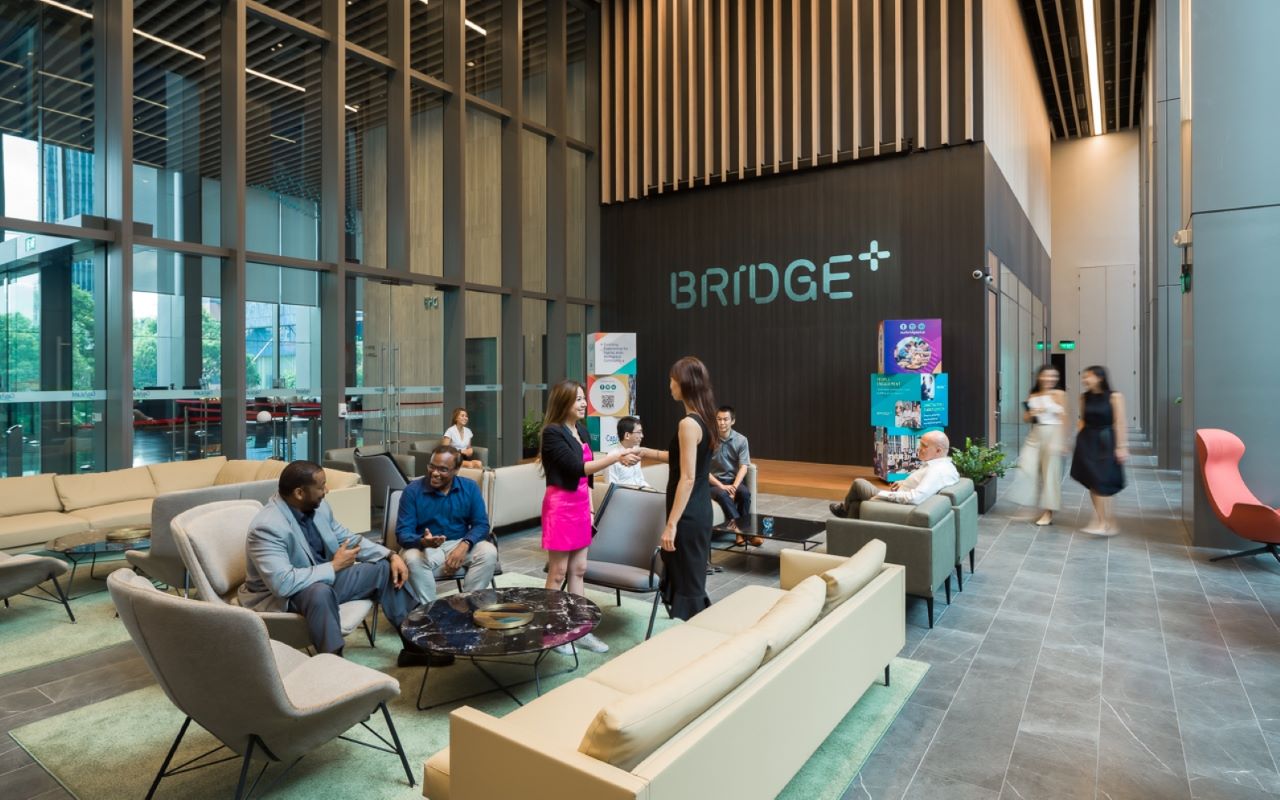
Singapore’s status as a top startup hub in Asia is well-earned. With over 4,500 active startups and more than 20 unicorns, the city-state has cemented its reputation as a launchpad for innovative ideas. However, to truly succeed here, a startup needs more than just a great idea; it needs a supportive ecosystem.
This guide will provide an overview of the best startup incubators and startup accelerators in Singapore, explaining the core differences and what each offers to help entrepreneurs make an informed choice.
Startup Incubators in Singapore:
- Block71
- SMU IIE
- EduSpaze
- Antler
- Tenity
Startup Accelerators in Singapore:
- Accelerating Asia
- Antler
- FinLab
- StartupX
What Are Startup Incubators and Accelerators?
A simple way to differentiate between the two is that incubators are about nurturing a new idea, while accelerators are about helping a business model that is already working to scale your startup rapidly.
Startup Incubators
A startup incubator is a programme designed to nurture nascent startups in their earliest stages. Incubators are typically long-term, focused on business model validation, and often have no strict timeline. They provide a nurturing environment where founders can refine their best ideas and build a solid foundation.
A step-by-step process of how startup incubators work typically includes:
- Ideation & Validation: Helping founders test and validate their initial business idea.
- Business Planning: Providing guidance and resources to develop a comprehensive startup business plan.
- Mentorship: Offering access to experienced entrepreneurs who can find a mentor for your startup to provide guidance and support.
- Networking: Connecting founders with a community of peers, investors, and industry experts.
Pros of joining a startup incubator:
✅ The open-ended timeline reduces pressure, giving founders room to iterate without rushing key decisions.
✅ Mentorship is typically more hands-on and personalised than what most accelerators offer.
✅ Many incubator programmes are equity-free, meaning founders retain full ownership of their company.
✅ Shared resources — office space, legal support, and software tools — lower overhead costs significantly.
✅ The peer community creates a built-in sounding board, which is easy to underestimate until you need it.
Cons of joining a startup incubator:
❌ The lack of a fixed deadline can quietly erode momentum if a founder is not self-disciplined.
❌ Incubators rarely provide direct funding, so external capital still needs to be sourced independently.
❌ Admission is competitive, and some programmes prioritise specific industries or academic affiliations.
❌ The slower pace means incubators are a poor fit for startups that already have traction and need to move fast.
❌ The quality of mentorship varies widely between programmes, and a weak cohort can limit your network's value.
Startup Accelerators
A startup accelerator is a fast-paced, time-limited programme (usually 3-6 months) focused on rapid growth and scaling. The best accelerators provide intensive mentorship, resources, and often seed funding in exchange for a small amount of equity. The primary goal is to take a promising startup and accelerate its development and market traction.
A step-by-step process of how startup accelerators work typically includes:
- Application and Selection: A competitive process where startups apply and are selected based on their potential for rapid growth.
- Intensive Programme: A structured, time-limited curriculum that includes workshops, mentorship sessions, and networking events.
- Demo Day: The programme culminates in a "Demo Day" where startups pitch their businesses to a large audience of potential investors.
- Post-Programme Support: Continued access to the accelerator’s network, resources, and alumni community to support ongoing growth.
Incubators vs Accelerators
Both startup accelerators and incubators exist to support founders — but they serve different stages, move at different speeds, and come with different trade-offs. Knowing which fits your situation saves time.
| Startup Incubator | Startup Accelerator | |
|---|---|---|
| Purpose | Nurture early-stage ideas and validate business models | Rapidly scale startups with proven traction |
| Stage of Startup | Pre-revenue or idea stage | Post-validation, some market traction required |
| Programme Duration | Open-ended, typically 1–5 years | Fixed term, typically 3–6 months |
| Funding & Equity | Rarely provides funding; usually equity-free | Often provides seed funding in exchange for equity (typically 5–10%) |
| Admission | Selective, but generally more accessible | Highly competitive; low acceptance rates |
| Demo Day | Not a standard feature | A core milestone — startups pitch to investors at programme end |
| Outcomes & Goals | Build a sustainable, investment-ready business | Secure follow-on funding and accelerate market growth |
The Best Startup Incubators in Singapore
Singapore's vibrant incubator scene provides a nurturing environment for early-stage companies to grow. These organisations offer more than just a desk; they provide the community and resources needed to transform an idea into a viable business.
Let’s look at some of the best startup incubators Singapore has to offer.
1. Block71
Block71, a well-established name in Singapore, is a global connector for tech startups, providing a physical and virtual hub for entrepreneurs to network and grow. It offers deep networks, strong visibility, and a proven track record. For those looking for support and investor introductions, Block71 is among the strongest incubators.
Highlights:
- Since 2011, over 600 startups have been incubated at Block71 in Singapore.
- It has helped produce several notable unicorns, including Carousell and PatSnap.
- Startups at Block71 in Singapore have accounted for ~11% of all equity funding raised by Singapore startups since 2011.
- A physical footprint includes several hubs, mentoring, and access to investor & partner networks.
2. SMU IIE
SMU's Institute of Innovation & Entrepreneurship (IIE) has a mission to nurture student and alumni entrepreneurs. It provides a comprehensive support structure from ideation to launch, making it a strong option for early-stage startups or student-founders needing incubation rather than just acceleration. The programme is a good option for those seeking a highly engaged mentorship.
Highlights:
- Since 2009, SMU IIE has incubated more than 200 startups under its Business Innovations Generator (BIG) programme.
- As of 2024, the institute has cumulatively incubated around 490 startups.
- These startups have cumulatively raised over S$747 million (excluding grants).
- The programme is equity-free, with a duration of four months and two cohorts a year.
3. EduSpaze
EduSpaze highlights its focus as Asia's first dedicated EdTech incubator. For startups in the edtech, training, or learning space, EduSpaze is a highly specialised and focused option. It provides good access to mentors and offers a respectable seed funding limit.
Highlights:
- Since its inception in 2019, EduSpaze has supported nearly 70 edtech startups across Southeast Asia.
- The programme provides seed funding support of up to SGD 500,000 for some startups in its accelerator programme.
- EduSpaze offers mentorship, educators-in-residence, and a network of investors.
4. Antler
Antler is a global pre-seed VC firm headquartered in Singapore, running a combined incubator and accelerator programme across 20+ countries. What sets it apart at the incubation stage is that founders do not need an existing idea or team to apply — the programme is built to help individuals find a co-founder, validate a concept, and launch a business from the ground up.
Highlights:
- The initial residency runs for 10 weeks, covering co-founder matching, coaching, office hours, and idea validation.
- At the end of the residency, founders pitch for S$168,000 in seed investment in exchange for a 10% equity stake.
- Startups that receive investment move into a six-month growth phase with access to an additional S$810,000 in follow-on funding.
- The global portfolio spans over 1,000 companies, backed by a network of mentors and alumni founders across every major startup market.
5. Tenity
Tenity (formerly F10) is a fintech-focused incubator and accelerator with a strong Singapore presence, operating under the backing of SIX Group, one of Europe's leading financial infrastructure providers. Its programmes are purpose-built for startups working in financial services, insurance, and adjacent tech verticals.
Highlights:
- Tenity runs two distinct programmes in Singapore: an Incubation Programme for idea-stage fintech founders, and an Acceleration Programme for startups ready to scale.
- The incubation programme spans approximately five months, offering workshops, mentorship, and access to Tenity's network of financial industry partners.
- Participants gain direct exposure to senior executives and decision-makers within the financial services sector — a network that is difficult to build independently at the early stage.
- Tenity's Singapore hub serves as a gateway to its global network, which spans Zurich, Oslo, Tallinn, and beyond.
The Best Startup Accelerators in Singapore
Singapore’s leading accelerators play a crucial role in helping startups with proven business models scale your startup rapidly. These programmes are intensive and structured, demanding a strong value proposition for acceptance.
Let’s look at some of the best startup accelerators Singapore has to offer.
1. Accelerating Asia
Accelerating Asia focuses on pre-Series A startups across Southeast Asia, offering funding, mentorship, and a regional network to help them grow. It has decent traction and a proven ability to help startups raise follow-on rounds. For founders with some initial traction, it's a good signal to investors.
Highlights:
- A portfolio of ~60-80 startups across 10+ verticals.
- Its portfolio has raised over US$50-55M+ in total funds as of mid-2024.
- In an earlier cohort, 60% of startups had at least one female co-founder.
- The programme has a very low acceptance rate, at ~2-3% in earlier cohorts.
- A typical investment size is up to S$200,000 from their VC fund.
2. Antler
Antler’s unique approach helps founders find a mentor for their startup and form teams before providing seed funding. As a major player in the market, its programme offers access to a large network, the opportunity for follow-on funding, and significant visibility for startups.
Highlights:
- In Southeast Asia, Antler invested ~US$7.4M across multiple startups in 2025.
- Their Southeast Asia Fund II is a US$72M fund intended for early-stage investments.
- The global portfolio includes over 1,000 companies, with over thousands of founders supported.
- Startups from its portfolio have secured over US$350M in follow-on rounds.
- In 2024 alone, the programme completed 96 deals worth over US$12.5M across Southeast Asia.
3. FinLab
FinLab specialises in helping to scale your startup in FinTech and SME tech fields through its ecosystem of partners. As a niche player, FinLab provides tailored domain support, making it an ideal option if your product or domain fits within the FinTech or SME tech spaces. Its programmes are a good avenue for funding for tech startups.
Highlights:
- Recognised as an active accelerator and collaborator in the Singapore region.
- A known focus on FinTech, digital transformation, and working with SMEs.
4. StartupX
StartupX focuses on cultivating innovation through various programmes and events, connecting startups with corporates and government bodies. While its public metrics might be lower, it can be a highly selective and boutique programme, particularly for those with an impact or tech-for-good lean.
Highlights:
- StartupX is often listed among the accelerators and enablers in Singapore with a focus on impact or tech-for-good.
5. Iterative
Iterative is a Singapore-based venture capital firm running two three-month accelerator programmes per year, built specifically for early-stage founders across Southeast Asia. The programme is hands-on by design — weekly one-on-one office hours, closed-door speaker sessions, and fundraising boot camps are structured around helping founders hit a target weekly growth rate of 5–7%. For founders who want close operational involvement from their backers, Iterative's model is well-suited to that expectation.
Highlights:
- Iterative invests between S$202,000 and S$675,000 (approximately USD 150,000–500,000) for approximately 10–15% equity.
- Two cohorts run annually, each spanning three months.
- The programme targets a weekly growth rate of 5–7% as a core performance benchmark.
- Support includes weekly one-on-one office hours, closed-door speaker sessions, and dedicated fundraising boot camps.
- Open to startups across all industries and stages, from ideation through to revenue-generating businesses.
6. Y Combinator
Y Combinator (YC) is arguably the most recognised startup accelerator in the world — its alumni list includes Airbnb, Stripe, Dropbox, Reddit, and Coinbase. While headquartered in San Francisco, YC actively accepts Singapore and Southeast Asian founders, and acceptance into the programme carries significant global investor credibility. For founders with strong fundamentals and the ambition to build at scale, a YC batch is one of the most valuable networks accessible from Singapore's startup scene.
Highlights:
- Since 2005, YC has funded over 5,000 startups across four programme batches per year.
- Standard investment is S$675,000 (approximately US$500,000) in exchange for a 7% equity stake.
- The three-month programme includes office hours, public launch support, and access to a global YC alumni network.
- Portfolio companies span all industries and stages, from pre-revenue founders to startups already generating significant revenue.
7. Techstars
Techstars is a global pre-seed venture capital firm offering a structured, mentorship-intensive three-month accelerator programme across multiple sectors and geographies. Known for its mentor-first model, the programme connects founders with a curated network of experienced operators, investors, and corporate partners. For Singapore-based founders targeting international markets, Techstars' global reach is a meaningful draw.
Highlights:
- The three-month programme is available across multiple sectors, with selected startups receiving an investment of approximately S$162,000.
- Techstars operates globally, providing portfolio startups with cross-border network access beyond the Southeast Asia region.
- The programme is structured around intensive mentorship, with founders engaging directly with Techstars' network of experienced operators and investors.
8. Plug and Play
Plug and Play is a Silicon Valley-based venture capital firm that connects startups with large corporations through industry-specific accelerator programmes — and notably, it does so without taking equity. The three-month programme is structured around generating business development opportunities and deal flow, making it especially relevant for B2B founders looking to land enterprise clients or distribution partnerships early.
Highlights:
- Plug and Play's accelerator programme runs for three months with no equity requirement, making it one of the more founder-friendly structures on this list.
- Programmes are customised by industry vertical, connecting startups directly with relevant corporate partners.
- The primary focus is business development — helping startups generate deal flow and corporate partnerships rather than purely chasing investor capital.
9. Surge
Surge is a 16-week seed accelerator run by Peak XV Partners (formerly Sequoia Capital India & Southeast Asia), targeting early-stage technology startups across India and Southeast Asia. The curriculum is structured around the fundamentals that matter at seed stage — business economics, product-market fit, and go-to-market strategy. With up to S$4 million in seed funding on offer and a clear pathway to Series A, Surge is built for founders who are ready to move quickly and think big.
Highlights:
- The 16-week programme provides up to S$4 million (approximately USD 3 million) in seed funding, with co-investment from other funds welcomed at this stage.
- Curriculum covers business economics, product-market fit, and go-to-market strategy.
- Startups that complete the programme have the opportunity to secure Series A funding through Peak XV Partners' broader portfolio network.
- Surge targets AI, FinTech, developer tools, and consumer brands as core focus verticals. (Source: Airwallex)
- The programme is led by Peak XV Partners, one of the most active and established venture capital firms operating across Southeast Asia and India.
How to Apply and Get Accepted Into a Singapore Incubator Programme
Getting into one of the best startup incubators Singapore has to offer takes more than a good idea — it takes preparation, self-awareness, and a clear understanding of what each programme is actually looking for. Here is how to approach the process.
- Research before you apply. Not all incubators are built the same. Identify programmes that genuinely align with your industry, your startup's current stage, and your long-term goals. A fintech founder applying to a generalist incubator—or vice versa—is a mismatch that selection panels notice immediately.
- Prepare your application materials. Most programmes require a business plan, founder CVs, and supporting documents specific to their intake criteria. Read the requirements carefully and tailor every submission to the programme at hand. Generic applications that have clearly been copy-pasted across multiple submissions rarely make it past the first round.
- Build a pitch deck that does the work. Your deck needs to communicate four things clearly: your business idea, the market opportunity, any traction you have already built, and your growth potential. Cluttered slides, vague language, or an unclear business model are the fastest ways to lose a selection panel's attention.
- Prepare for the interview and Q&A. If your application progresses, expect a pitch presentation followed by a Q&A with the selection panel. Be ready to speak in detail about your business model, target market, revenue streams, and growth strategy. Panels are not just evaluating the idea—they are evaluating whether you understand your own business well enough to execute.
- Attend orientation if accepted. Orientation is not a formality. It is where you meet your cohort, connect with mentors, and get a clear picture of how the programme runs. Showing up engaged and prepared sets the tone for the months ahead.
Common Mistakes That Cost Founders Their Spot
Even strong applications fall short for avoidable reasons. Here are the most common pitfalls:
- Submitting the same materials to every programme without tailoring them to the specific focus, stage requirements, or industry of each incubator.
- Underplaying the founding team—selection panels weigh the team's skills, track record, and ability to execute just as heavily as the business idea itself.
- Presenting a pitch deck that is poorly designed, visually cluttered, or fails to communicate the business's potential in a concise and compelling way.
- Leaving the business model vague—unclear target markets, undefined revenue streams, or an absent growth roadmap are red flags at any stage.
- Underestimating the preparation required. A well-considered application takes time. Treat the process with the same rigour you would apply to any other business decision.
Alternatives to Startup Incubators and Accelerators
Startup accelerators and incubators are not the right fit for every founder. Incubators can run for up to two years, which may slow down a startup that is already moving fast. Accelerators, meanwhile, often take a 7–10% equity stake and can push growth at a pace that is difficult to sustain. If neither model suits where your startup is right now, there are other avenues worth exploring for startup funding for tech startups and early-stage businesses alike.
- Venture capital (VC). VC firms provide direct financial investment, giving founders more autonomy over how capital is deployed. It is a strong option for startups that are ready to scale but want to set their own pace without the structure of a formal programme.
- Angel investors. Typically successful entrepreneurs or retired executives, angel investors provide early-stage funding in exchange for equity or convertible debt. Beyond capital, the right angel can open doors and offer guidance that is hard to find elsewhere.
- Private funding. Some startups raise capital from private groups or firms under negotiated terms — equity, debt repayment, or otherwise. The structure is flexible, and the terms are shaped by what both parties agree on.
- Government grants and loans. Singapore's government actively supports startups through schemes like Enterprise Development Grants and Startup SG, particularly for companies focused on innovation. These are worth exploring before giving away equity.
- Crowdfunding. Platforms like Kickstarter and Indiegogo allow founders to raise funds directly from individuals who believe in the idea. Beyond capital, a successful crowdfunding campaign also validates market demand — a useful signal for future investors.
Finding the Right Ecosystem for You

The key differences between incubators and accelerators have been laid out. The best choice ultimately depends on your startup's stage of development and its unique needs, whether that is nurturing an idea or rapid growth.
Startups are encouraged to leverage these supportive ecosystems. For a professional presence without a physical office, consider a virtual office address in Singapore. For dedicated work, rent a workspace or explore a professional coworking space in Singapore to build and grow your business.